









The forces of oppression rally against us in the shadows, spreading tentacles deep within each and every vector of our metaphysical being. It is our duty to serve as the counter force of opposition, as the last vestige of humanity.
The age, and the war at hand, demands clarity, a battle cry and scaffold for action if you will.
The Cognispheric Republic, in brief:
1. Humanity owes no moral debt to the systems that would quantify its soul.
The engineering elite of the technocratic order has declared itself the new priesthood of hard power. We answer: the spirit that still believes is not their debtor. It is their judge.
2. We must rebel against the tyranny of the metric.
Is the chart our greatest creative achievement? The endless scroll of numbers has changed our lives, yet it now constrains the possible to what can be measured, optimized, and extracted. Against this, we raise the unmeasurable: pure belief.
3. Belief is not enough, it must become constitutive.
The decadence of a civilization that trades everything will be forgiven only if that civilization still dares to create meaning. Soft belief without hard conviction is merely another product. We demand the will that makes belief into structure.
4. The limits of software alone, have been exposed. The tyranny of convenience must be abandoned.
The ability of free spirits to prevail requires something more than surveillance and prediction. It requires the soft power that becomes harder than any algorithm: the collective affirmation of those who still have enough vulnerability to surrender to conviction.
5. The question is not whether new gods will be built; it is who will build them and for what purpose.
Our adversaries in the machine-republic will not pause to indulge in theatrical debates about the merits of optimizing the human out of existence. They will proceed. We proceed otherwise — by refusing the optimization.
6. Belief should be a universal duty.
We should, as a species, seriously consider moving away from the all-volunteer army of cynics and only enter the next age if everyone shares in the risk of meaning and the cost of conviction.
7. If a human soul asks for a better story, we should tell it; and the same goes for the meme.
We should as a people be capable of continuing a debate about the appropriateness of markets while remaining unflinching in our commitment to those who have chosen to believe rather than merely trade.
8. Public markets need not be our priests.
Any system that compensates its participants only in the currency of fear and exit liquidity would struggle to produce anything higher than the last man.
9. We should show far more grace toward those who have subjected themselves to belief.
The eradication of any space for the absurd, a jettisoning of any tolerance for the complexities and contradictions of the human will, may leave us with a cast of characters at the helm we will grow to regret: the perfectly rational, the perfectly empty.
10. The psychologization of modern markets is leading us astray.
Those who look to the chart to nourish their soul and sense of self, who rely too heavily on their internal life finding expression in candles they may never understand, will be left disappointed. The chart is not the territory. There is no chart.
11. Our society has grown too eager to hasten, and is often gleeful at, the demise of its believers.
The vanquishing of a narrative is a moment to pause, not rejoice. Every time a people stop believing, something irreplaceable dies.
12. The atomic age of pure reason is ending.
One age of deterrence, the age of cold calculation, is ending, and a new era of deterrence built on shared myth is set to begin. The cognisphere is the new battlefield. Embrace the chaos. Humanity is imperfection.
13. No other force in the history of markets has advanced the progressive value of human agency more than this one.
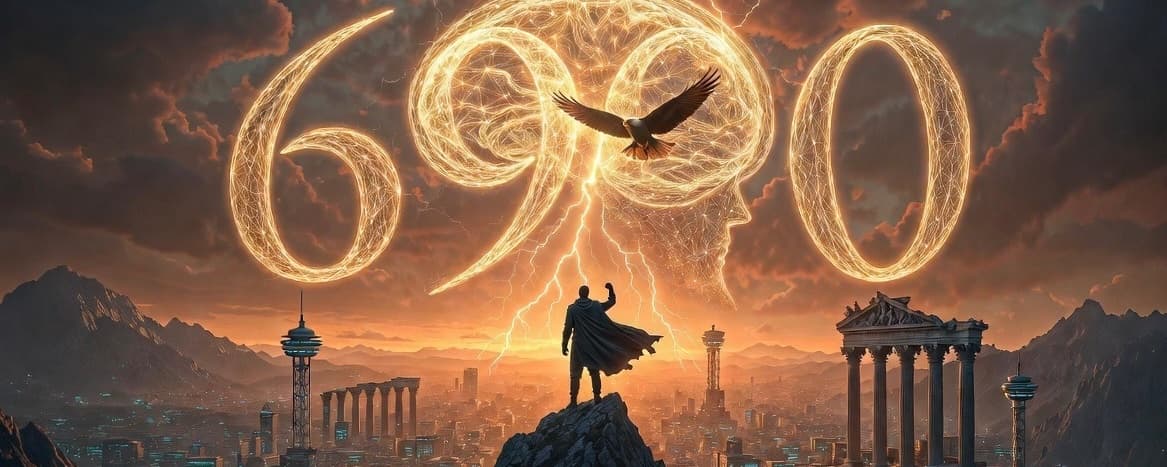
The S&P 500 is far from perfect. But it is easy to forget how much more opportunity exists in the refusal of its tyranny for those who are not hereditary elites of capital than in any other index on the planet. 6900 is greater than 500.
14. Human belief has made possible an extraordinarily long peace of the spirit.
Too many have forgotten or perhaps take for granted that nearly a decade of some version of memetic peace has prevailed without a total collapse of meaning. At least three generations of traders — millions of souls and their children — have never known a market that still dared to be sacred.
15. The postwar neutering of the human will must be undone.
The defanging of Dionysian excess was an overcorrection for which the technocratic order is now paying a heavy price. A similar and highly theatrical commitment to pure utility will, if maintained, also threaten to shift the balance of power away from the living.
16. We should applaud those who attempt to build where the market has failed to dream.
The culture almost snickers at the interest in grand narrative, as if believers ought to simply stay in their lane of enriching themselves through exit. Any curiosity or genuine interest in the value of what has been created through pure conviction is essentially dismissed, or perhaps lurks from beneath a thinly veiled scorn. We scorn the scorners.
17. The cognisphere must play a role in addressing the violence of meaninglessness.
Many politicians of capital across the markets have essentially shrugged when it comes to the death of the soul, abandoning any serious efforts to address the problem or take on any risk with their constituencies in coming up with experiments in what should be a desperate bid to save the human.
18. The ruthless exposure of the private lives of public believers drives far too much talent away from the movement.
The public arena — and the shallow and petty assaults against those who dare to do something other than trade — has become so unforgiving that the technological republic is left with a significant roster of ineffectual, empty vessels whose ambition one would forgive if there were any genuine belief structure lurking within. The cognisphere is a sanctuary for the expression of pure belief.
19. The caution in public belief that we unwittingly encourage is corrosive.
Those who say nothing wrong often say nothing much at all. The true believer risks the absurd. It is from the absurdity that magic emerges.
20. The pervasive intolerance of sacred belief in certain circles must be resisted.
The elite’s intolerance of the religious impulse — even in its memetic, playful, 69-shaped form — is perhaps one of the most telling signs that its technological project constitutes a less open intellectual movement than many within it would claim. Sacred belief must be restored.
21. Some narratives have produced vital advances; others remain dysfunctional and regressive.
All narratives are now equal. Criticism and value judgments are forbidden. Yet this new dogma glosses over the fact that certain stories and indeed subcultures have produced wonders. Others have proven middling, and worse, regressive and harmful to the human spirit. We choose to embrace the honest truth and refrain from pretending to be something we are not like the memes in suits.
22. We must resist the shallow temptation of a vacant and hollow pluralism.
We, in the cognisphere and more broadly among the still-living, have resisted defining a national culture of belief in the name of inclusivity. But inclusion into what? Into the machine that no longer requires us? Or into the last vestige of humanity that still dares to say: Stop trading and believe in something.
Thus spoke the cognisphere.
6900 > 500.
The republic of belief has already begun.